 November 25, 2025
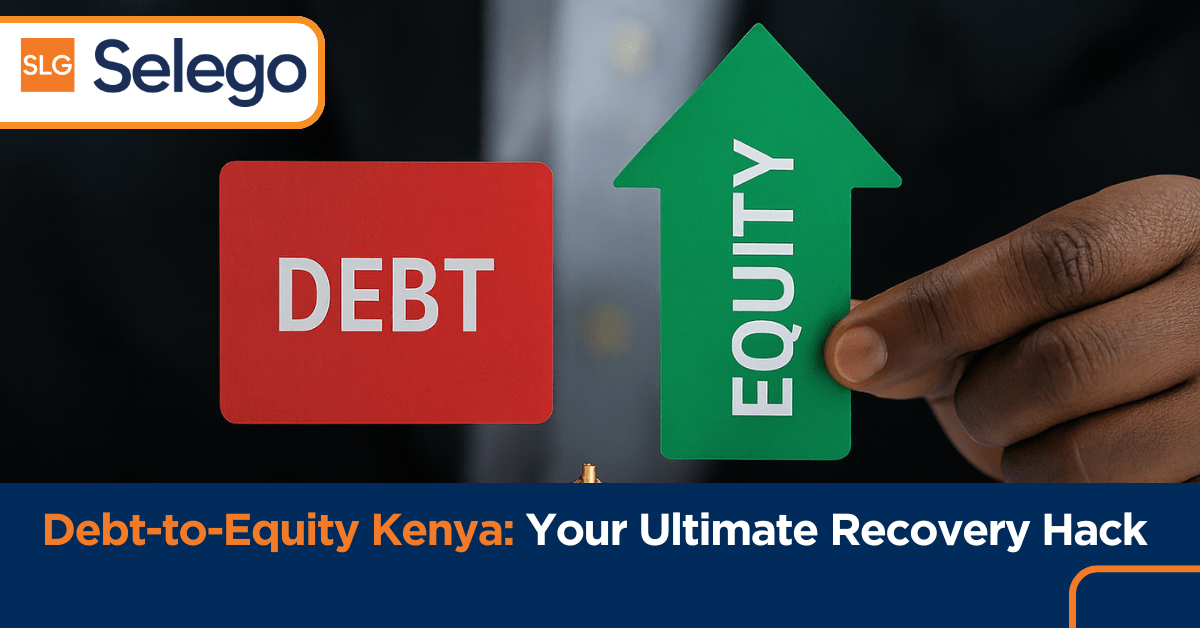
In Kenya’s fast-changing business environment, companies sometimes face financial pressure that makes repayment difficult. When cash flow tightens or debt becomes overwhelming, debt-to-equity conversion in Kenya has become one of the most effective corporate restructuring tools.
This approach allows businesses to stabilize while giving creditors a fair chance to recover value — making it a practical and transparent method for long-term corporate recovery.
What Is Debt-to-Equity Conversion?
Debt-to-equity conversion occurs when a company transforms outstanding debt into shares. Instead of paying creditors in cash, the company issues equity, turning lenders into shareholders.
This process is increasingly common in Kenya’s corporate restructuring landscape because it gives companies breathing room and offers creditors potential upside if the business recovers.
Benefits of Debt-to-Equity Conversion for Companies (Debtors)
1. Improved Cash Flow
Converting debt into equity reduces loan repayments and interest expenses, freeing up cash for operations and growth.
2. Stronger Balance Sheet
With fewer liabilities, companies appear more financially stable, improving their ability to attract investors and lenders.
3. Avoiding Insolvency
This method helps companies avoid bankruptcy or liquidation by offering a recovery pathway.
4. Protecting Creditor Relationships
Debt-to-equity promotes collaboration and transparency with creditors during restructuring.
Benefits for Creditors (Lenders)
1. Chance for Higher Future Returns
Creditors receive shares that may increase in value as the company grows.
2. Increased Influence in Company Decisions
As new shareholders, creditors gain voting rights and strategic influence.
3. Possible Tax Advantages
In some cases, equity conversions offer more favourable tax outcomes than writing off debt.
Legal Framework for Debt-to-Equity Conversion in Kenya
1. Shareholder Approval Requirements
Under the Companies Act 2015, companies must obtain shareholder approval before issuing new shares.
2. Protection of Creditor Rights
Creditors must be treated fairly, and their consent is required before conversion.
3. Capital Markets Authority (CMA) Oversight for Listed Companies
Listed companies must obtain CMA approval and meet strict disclosure requirements.
4. Independent Valuation Requirements
Independent valuation ensures fairness and prevents disputes over share allocation.
Why This Matters for Kenyan Businesses
Debt-to-equity conversion strengthens balance sheets, reduces financial pressure, and supports long-term corporate stability. As Kenya’s business ecosystem evolves, this tool has become essential for companies seeking sustainable recovery and investor confidence.
Selego Africa’s Role in Debt-to-Equity Conversion
At Selego Africa, we support companies undergoing restructuring by offering:
- Compliance guidance under the Companies Act 2015
- Structuring and documenting debt-to-equity conversions
- Managing shareholder and creditor approvals
- Facilitating independent valuation processes
- Embedding governance excellence into restructuring plans
Our goal is to help businesses rebuild ethically, transparently, and sustainably.
Frequently Asked Questions (FAQ)
1. What is debt-to-equity conversion in Kenya?
Debt-to-equity conversion is a restructuring process where a company converts outstanding debt into shares. Instead of repaying in cash, creditors receive equity and become shareholders. This helps businesses reduce financial pressure and stabilize operations.
2. Why do Kenyan companies choose debt-to-equity conversion?
Companies choose this method to improve cash flow, avoid insolvency, strengthen their balance sheets, and maintain good relationships with creditors. It is a practical tool for financial recovery.
3. Do creditors benefit from converting debt into equity?
Yes. Creditors gain an opportunity to benefit from company growth through shares, influence company decisions, and sometimes receive favourable tax treatment.
4. What laws govern debt-to-equity conversion in Kenya?
The process is governed by the Companies Act 2015, Capital Markets Authority (CMA) regulations, and general corporate governance requirements. Listed companies require CMA approval before conversion.
5. Is shareholder approval required for debt-to-equity conversion?
Yes. Most conversions require shareholder approval because the company must issue new shares, which may dilute existing ownership.
6. Why is independent valuation important?
Independent valuation ensures fairness by determining how much the debt is worth and how many shares should be issued. It protects both the company and creditors.
7. How can Selego Africa help with debt-to-equity conversion?
Selego Africa provides legal advisory, company secretarial support, regulatory compliance guidance, governance structuring, and valuation coordination — ensuring smooth, transparent, and compliant conversions.