 January 27, 2026
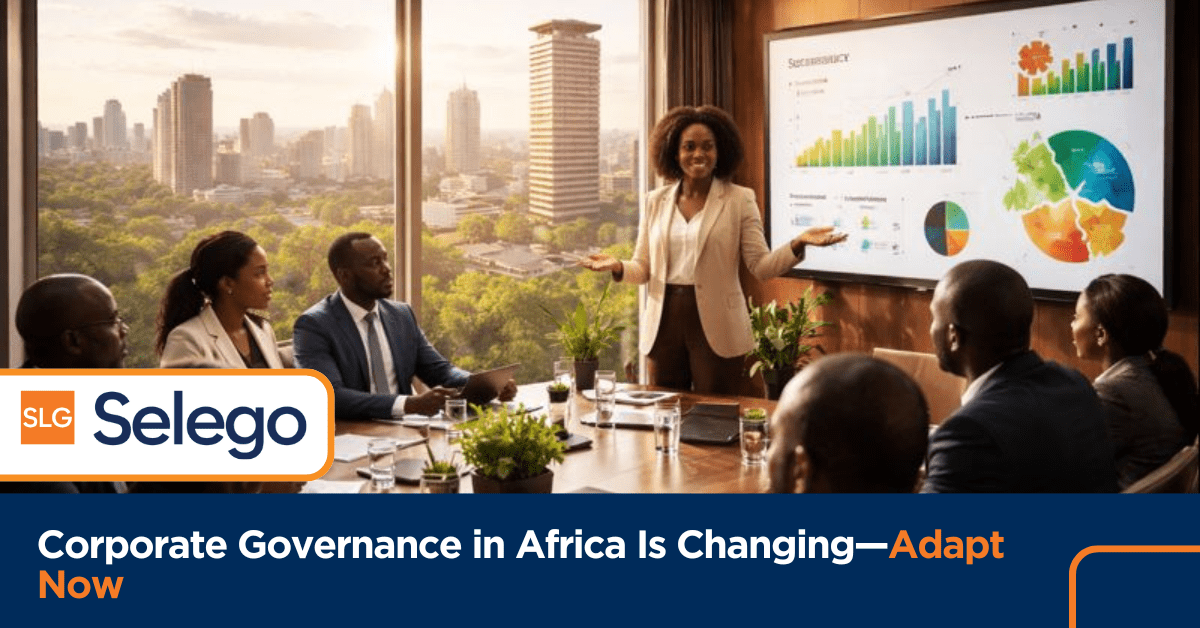
Corporate governance in Africa is undergoing a quiet but profound transformation. No longer is governance defined solely by statutory compliance, financial oversight, or risk registers. Instead, boards are being challenged by a far deeper question: why does the corporation exist, and who does it truly serve?
Across Kenya and the wider African continent, governance expectations are being reshaped by social pressure, regulatory evolution, and a new generation unwilling to accept silence or neutrality. This is not a future trend. It is a present reality. Boards that fail to respond risk losing trust, legitimacy, and long-term relevance.
A Perfect Storm Reshaping Corporate Governance in Africa
Several powerful forces are converging to redefine how companies are governed in Africa, particularly in highly regulated and socially sensitive sectors.
1. The Social Contract Has Fundamentally Changed
In many African economies, governments alone cannot meet the demand for jobs, infrastructure, and social services. As a result, corporations are increasingly viewed not merely as economic actors, but as social institutions with obligations to communities, employees, and society.
When companies fail to meet these expectations, their social licence to operate erodes quickly. Community resistance, reputational damage, and regulatory scrutiny often follow.
From a governance perspective, this places greater responsibility on boards and company secretarial professionals tasked with ensuring that governance structures remain legitimate, ethical, and aligned with societal expectations. This is where strong
company secretarial services in Kenya play a critical role in safeguarding board effectiveness and accountability.
2. Regulation and Capital Are Raising the Governance Bar
Regulators, investors, and development finance institutions are no longer requesting transparency — they are demanding it. African capital markets are aligning more closely with global ESG standards, while international investors expect robust governance frameworks and credible disclosures.
Today, good governance is a prerequisite for access to capital. Boards that fail to adapt risk exclusion from funding, partnerships, and growth opportunities.
This evolving landscape has increased demand for specialised legal advisory services in Kenya that help boards navigate regulatory complexity, fiduciary obligations, and emerging governance risks across multiple jurisdictions.
3. The Generational Shift: Gen Z Has Entered the Boardroom Equation
Perhaps the most transformative force reshaping corporate governance in Africa is Generation Z.
This generation prioritises ethics over expediency, purpose over profit, and accountability over anonymity. As digital natives, Gen Z uses technology and social platforms to amplify corporate behaviour instantly.
In this environment, silence is no longer neutral. It is often interpreted as complicity. Boards must therefore ensure that governance frameworks actively promote transparency, ethical leadership, and stakeholder engagement.
The Rise of the New Corporate Citizen in Africa
Stakeholder capitalism reframes corporations as participants in society, not merely profit-generating machines. In Africa — where inequality, unemployment, and community dependence on business remain acute — this approach is not ideological. It is practical.
As a result, boards are increasingly turning to corporate governance advisory services in Africa to help embed stakeholder governance, ESG oversight, and ethical leadership into board strategy and decision-making.
Five Governance Shifts African Boards Must Embrace
1. Boards as Guardians of Societal Trust
Boards are now judged not only on financial performance, but on their stewardship of ethics, culture, and public trust. This requires elevating governance beyond compliance into leadership.
Trust has become both a governance asset and a governance responsibility.
2. Governance Anchored in Purpose
Purpose is emerging as the strategic compass for modern organisations. Boards must ensure that purpose is authentic, measurable, and aligned with strategy — not merely a branding exercise.
Purpose-driven governance strengthens legitimacy and long-term sustainability.
3. Fiduciary Duty Is Being Redefined
The shareholder-first model is giving way to a broader interpretation of fiduciary duty — one that recognises that long-term value depends on responsible stakeholder management.
This shift is influencing governance codes, disclosure standards, and board evaluations across Kenya and Africa.
4. Employee Voice Has Become a Governance Metric
Employee wellbeing, whistleblowing mechanisms, and organisational culture are now board-level concerns. A toxic culture is no longer an HR issue — it is a governance failure.
5. What Gets Measured Gets Governed
Boards are expanding dashboards beyond financial metrics to include ethics, compliance culture, environmental impact, and community relations.
Many governance failures arise not from weak financials, but from blind spots in governance oversight and reporting.
The Future of Corporate Governance in Africa
Stakeholder governance represents an irreversible shift. Boards that adapt will build resilient, trusted, and future-ready organisations. Those that resist risk becoming disconnected from the societies that grant them the licence to operate.
The revolution in the boardroom may be quiet — but its consequences will be unmistakable.
How Selego Africa Supports Boards and Corporate Leaders
In this evolving governance environment, organisations cannot navigate complexity alone.
Selego Africa supports businesses across Kenya and Africa through:
- Professional company secretarial services
- Strategic legal advisory and statutory compliance
- Board-level corporate governance advisory
- End-to-end corporate support services including compliance, structuring, and regulatory filings
- Specialist immigration services in Kenya for organisations with cross-border talent needs
- Secure custodial services supporting corporate governance, documentation, and trust structures
By partnering with Selego Africa, organisations ensure governance is not merely about meeting legal obligations — but about building trust, strengthening accountability, and creating sustainable long-term value.
Frequently Asked Questions (FAQ)
1. Why is corporate governance changing in Africa?
Governance is evolving due to regulatory reforms, investor expectations, social pressure, and generational shifts that demand transparency, ethics, and accountability.
2. What role do boards play in stakeholder governance?
Boards oversee ethics, culture, ESG risks, and stakeholder engagement to ensure long-term legitimacy and sustainability.
3. How does governance affect access to capital in Africa?
Strong governance is now a prerequisite for investment, funding, and partnerships, especially from international investors and DFIs.
4. Why is Gen Z influencing corporate governance?
Gen Z prioritises ethics, purpose, and accountability, using digital platforms to reward responsible companies and expose misconduct.
5. What services does Selego Africa offer to support governance?
Selego Africa provides legal advisory, company secretarial services, governance frameworks, statutory compliance, data protection, immigration advisory, and policy development support.